
How to Create a Unique Game Aesthetic: Color Theory and Art Direction
By Leila · Creative Director · Game Designer
Heya! I’m Leila.
A lot of developers are obsessed with one thing right now: photorealism. The belief is that without the highest polygon counts and the most expensive textures, a game can’t succeed.
They’re wrong. Graphics fade. A vibe doesn’t.
Here’s how to build an aesthetic that belongs to you, the same way I built mine.
Pick three colors and marry them
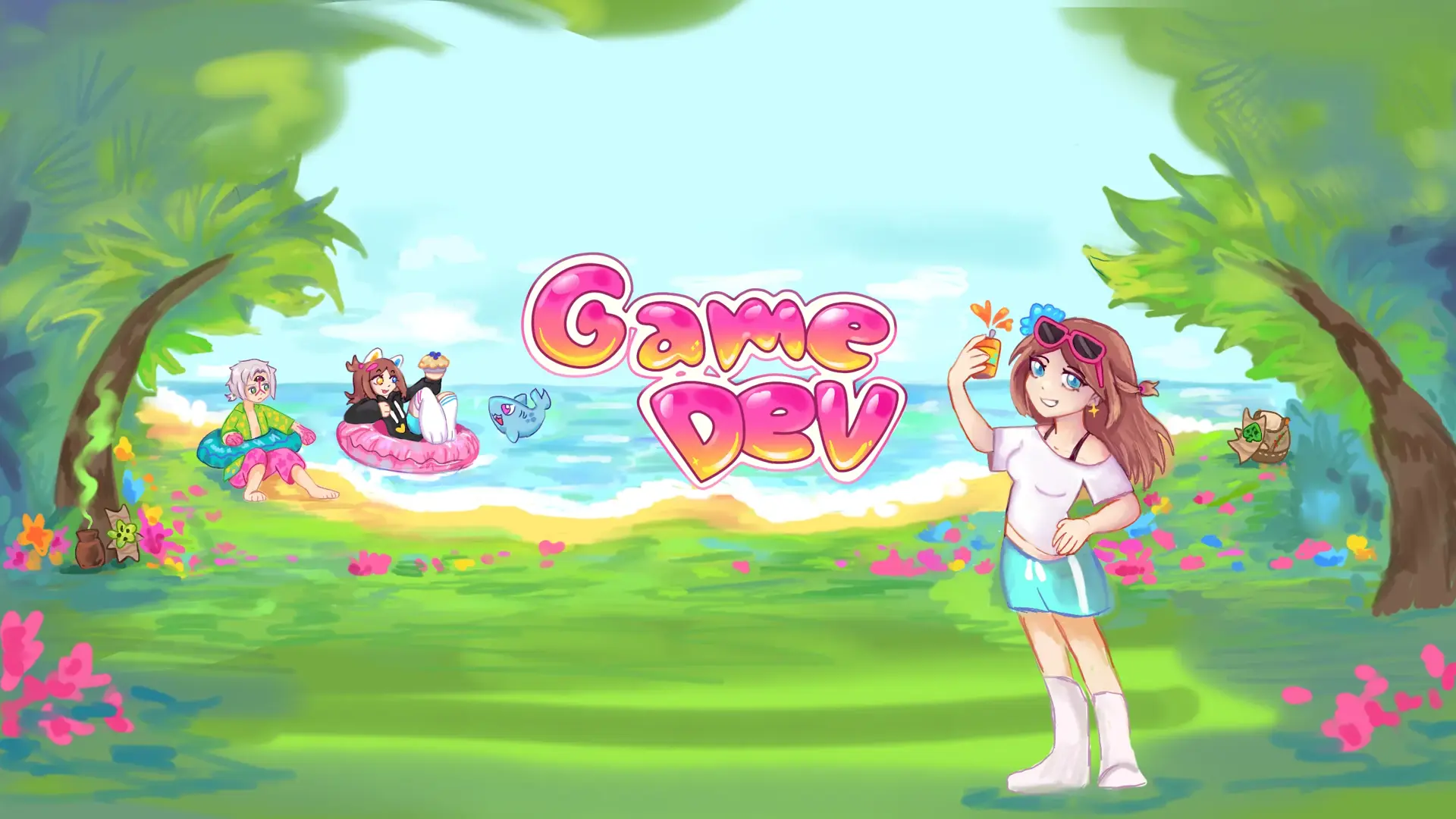
You need a signature, and a signature is smaller than people expect. Mine is three colors: blue, yellow, and pink.
They’re not colors I picked because I liked them that day. They’re bright and hopeful, but the contrast between them keeps the whole thing from going soft. You don’t need a thousand colors to build a world. You need the right three, and then you need to never quietly swap one out.
This is easier to see in games you already know. Think about Detroit: Become Human. The colors that come back to you are blue, white, and a heavy dark grey. See those three together anywhere and your brain goes straight to that game.
The Wolf Among Us is a completely different story with a completely different mood, and what sticks are purple, pink, and yellow. That’s why the fan art I painted for it stayed in those colors. Anything else wouldn’t have read as that game, no matter how accurate the character was.
Even Minecraft, which is about as far from art-directed realism as you can get, owns green, brown, and light blue.
That’s color theory doing its real job. It isn’t about being pretty. It’s about being remembered while nobody is playing.
It works well enough that when I see a random object out in the world in pink, blue, and yellow, my first thought is: oh, that gives Leiloo vibes. That reaction is the entire goal.
Then put them absolutely everywhere
A signature you only use sometimes isn’t a signature. The second part is execution, and execution means the palette shows up in every place your project touches.
You see those three colors in my character, Leiloo Sharkind. You see them in the game world she lives in. You see them on my YouTube channel, in thumbnails, in the concept art I post while a design is still forming.
At that point you’re not making content anymore. You’re building a universe, and universes get recognized before they get read.
Practical version, since this is the step people skip: pick your three, write down the hex codes, and keep them in a file you actually open. Icons, key art, store page, social banners, the loading screen. Every time you’re about to introduce a fourth color, ask whether it’s carrying meaning or just decorating.
A vibe can come from anywhere
Third, and this is the freeing part: colors anchor your work, but they aren’t the whole identity.
Your vibe can come from anywhere. An era, like the 80s, or a sleek futuristic look. Mine leans into 2000s arcade, which is why the world feels loud and friendly instead of grim.
It can also be an animal. The shark sits at the center of my universe, and once it was there, decisions got easier: what the enemies look like, what the collectibles are, why the color blue keeps showing up in the background.
The key isn’t following whatever is trending. It’s combining elements that feel right together and then staying with them long enough for people to learn them.
Be unmistakable, not perfect
If you’re building your first game, stop trying to make it perfect. Perfect is invisible. Aim for unmistakable instead, because that’s the version people describe to their friends.
Three colors, applied everywhere, plus one idea nobody else would have picked. That’s an art direction, and it costs nothing except the discipline to not drift.
For the rest of what a first game needs, I wrote up the three pillars I’d start from.
Now go find your palette, and get to work.
Related Posts
- 1 Docker for Solo Game Developers: Stop Being Tech Support for Your Own PCGame Development · Unity, Blender and a test server on one machine will break each other eventually. Containers keep every project's setup in its own box, so your computer stays clean.
- 2 Game Character and Story Design: How to Make Players CareGame Development · Good mechanics keep players in the game. A character with a spark and a story worth finishing is what keeps them from putting it down. Here's how to build both.
- 3 How to Launch an Indie Game in 2026: The Three PillarsGame Development · Launching your first game does not start with code or expensive software. It starts with a character worth building a world around, and a broken prototype.
- 4 2D vs 3D for Your First Game: Which One Should a Beginner ChooseGame Development · 2D lets you learn movement, collisions and animation without a whole 3D workflow on top. Here is when to start there, when 3D is worth it, and how to skip the art.
Random Posts
- 1 How to Add an Icon for a Game in UnityCookbook · The shortest path to setting a game icon in Unity — File → Build Settings → Player Settings — plus fixes for the two mini-problems you'll run into.
- 2 How to Launch an Indie Game in 2026: The Three PillarsGame Development · Launching your first game does not start with code or expensive software. It starts with a character worth building a world around, and a broken prototype.
- 3 Docker for Solo Game Developers: Stop Being Tech Support for Your Own PCGame Development · Unity, Blender and a test server on one machine will break each other eventually. Containers keep every project's setup in its own box, so your computer stays clean.
- 4 How to Use Layers in ProcreateCookbook · Layers let you stack image elements and edit one without breaking the others. Short tour — create, hide, duplicate, lock, alpha-lock, adjust visibility.